

Longtail E-Bikes with Child Seats: A Practical Guide to Family Day Trips
A lakeside picnic can be close enough to cycle to but too far for a young child to ride independently. The same is true of a market town a few miles from your accommodation, or a park reached by a pleasant stretch of cycle path. These are often the outings families would enjoy making by bicycle, if everyone could comfortably complete the journey.
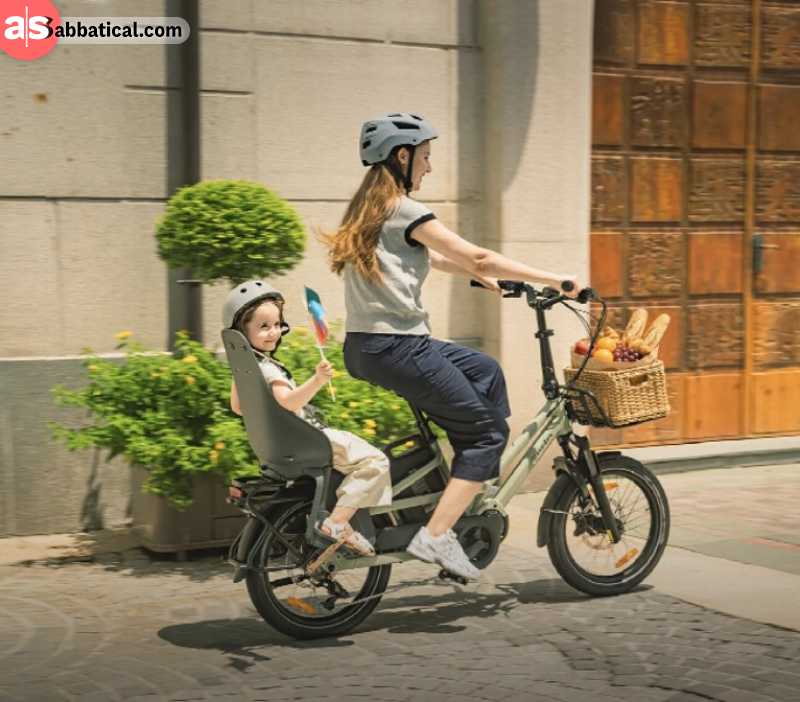
A longtail e-bike with a suitable child-seat setup offers one way to make those trips possible. An adult pedals while the children travel behind, sharing the changing scenery and the stops along the way.
Making that arrangement work takes more thought than choosing a bicycle with a long rear rack. The seats need to suit the children and the bike, the adults need to feel comfortable handling it, and there must still be somewhere for the picnic bag. Those details shape the day far more than a headline motor specification.
Why consider a longtail for family outings?
A longtail extends the rear section of the bicycle to create space behind the rider. Depending on the model and its approved accessories, that space can accommodate child seats or other passenger equipment.
For a family day trip, the attraction is straightforward: children can join a journey they cannot yet complete on their own bikes. You can leave your accommodation together, stop at a playground and continue to lunch without expecting a young rider to manage every hill or the return journey.
The layout also introduces practical questions. With seats fitted, can you still carry a bag? Is there enough room to manoeuvre through the gate at your accommodation? Can you park somewhere level when it is time to help the children off?
Think of the bicycle as a complete family setup. The frame, seats, accessories and luggage arrangement need to work together.
One child seat or two? Start with the seating arrangement
Before comparing bicycles, establish what each child needs. Follow the child-seat manufacturer’s requirements for age, weight, development and fit, alongside the bicycle manufacturer’s instructions. A seat that worked for another family may not suit your child or your chosen bike.
For one child, the main question is whether a particular seat is approved for the available mounting system. Check the exact seat model and mounting method, rather than relying on a general statement that a bicycle accepts child seats.
Two seats require a more detailed compatibility check. A long rear platform does not, by itself, establish that two particular seats can be fitted together. Their mounting positions, clearances and combined load must all be suitable.
There may also be families with children at different stages: one needs a child seat, while the other may qualify for a different manufacturer-approved passenger arrangement. That combination still needs checking. A padded bench, handrail or surrounding guard does not automatically provide the support and restraint of a child seat.
Keep the different weight limits separate. The bicycle’s total permitted load, the rear rack’s limit and each seat’s limit describe different things. Accessories and luggage also contribute to the complete load.
Getting these details settled before purchase avoids discovering that the bike you like cannot accommodate the seating arrangement you need.
Where the Fiido T3 Max fits
Within Fiido’s electric cargo bike range, the T3 Max is a longtail model worth considering for family outings, with the exact child-seat arrangement confirmed before purchase.
Fiido describes the T3 Max as having an extended rear rack and supporting child-seat installation. It also lists a low-step frame, dual-leg kickstand, 100Nm mid-drive motor and four-piston hydraulic brakes. These features give families specific things to assess when trying the bike.
The extended rear section is the starting point for planning the passenger layout. However, the manufacturer’s general child-seat guidance should be followed by confirmation of the exact seat or seats you intend to use.
The low-step frame is relevant once the rear is occupied. It gives the rider a way to get on and off without swinging a leg over the passenger area. Try that movement as part of a demonstration, including how you will hold the bicycle steady.
The dual-leg kickstand is another useful detail to examine during loading and unloading. It does not remove the need for an adult to support and supervise the bicycle, and children should never be left unattended on it.
The motor and brakes deserve attention on a test ride too. Ask about controlled starts, gear selection on hills and braking with the intended load. A confident family outing begins with an adult who understands the bicycle’s behaviour.
Leave room for the things children need
Seats often receive all the attention during the purchase. The first outing reveals what else needs a home: water bottles, snacks, spare layers, sun protection and perhaps a small picnic blanket.
Work out the luggage arrangement with the seats already in place. A bag that fits neatly on an empty rack may interfere with a child seat, foot support or access to a buckle once the passenger setup is installed.
Use compatible storage accessories and respect their individual limits. Keep straps and loose items away from moving parts, and avoid arrangements that obstruct the rider’s control of the bicycle.
It helps to pack for a realistic outing rather than every possible eventuality. A short trip with a café stop may need much less equipment than a full day away from accommodation. Reducing unnecessary items makes the bicycle easier to organise and leaves fewer things to manage when helping children on and off.
If you are buying accessories, ask to see the proposed seats and bags fitted together. That is more informative than looking at separate product photographs.
Plan around the passengers, not the battery
An e-bike may have enough energy for a long ride while its youngest passenger has had enough after the first few miles. Build the day around places the children will enjoy stopping.
For an initial outing, a simple loop or an easy out-and-back route is often practical. For example, you might ride from your accommodation to a nearby park, continue to a picnic spot and return along a familiar route. Treat that as a planning pattern, then check the actual roads and paths at your destination.
Look beyond the distance shown on the map. Consider traffic, surface quality, gradients and whether there are convenient places to stop. Check access rules for the bicycle and route you intend to use. Steps, narrow barriers and awkward entrances can complicate a journey on a long bicycle even when the surrounding path looks inviting.
Plan breaks before they become urgent. A playground, a place to stretch or a stop for a drink gives the journey a rhythm children can enjoy. Leave enough flexibility to turn back early.
For your first family rides, a modest route with an enjoyable destination is more useful than an ambitious mileage target.
Practise the stops as well as the riding
The moments between riding deserve rehearsal: bringing the bicycle to a halt, holding it steady, parking and helping passengers out.
Start by learning the bicycle without passengers in a suitable, quiet place. Familiarise yourself with the controls, low-speed turns, starts and stops. Arrange an explanation of the approved seating setup and loading procedure before carrying children.
Once everything is correctly fitted, begin with a short family ride close to your starting point. Check that restraints and foot supports are adjusted as instructed, and make sure clothing and belongings cannot reach the wheels or drivetrain.
During the outing, stop somewhere suitable to check comfort and fit. Children may not describe a rubbing strap or awkward foot position clearly, so allow time to notice and address those issues.
These first trips also help you learn what to pack, how long a comfortable outing lasts and which stops work well for your family.
Check the practicalities at your destination
A family bicycle needs somewhere appropriate to stay overnight. Before booking accommodation, ask about secure storage, access and any charging arrangements you will need.
If you plan to transport the bike to your destination, check compatibility with the transport system’s manufacturer. Dimensions, weight, attachment points and the added bulk of accessories all matter. Do not assume that equipment used for a conventional bicycle will accommodate a longtail.
Choosing an ebike for family trips means checking how the complete setup works with your passengers, your luggage and the places you plan to visit.
A useful first goal is a relaxed half-day outing: an easy route, a worthwhile stop and plenty of time to return. Once the seating, handling and packing arrangements feel familiar, you can build on that experience. The reward is having more places you can explore together, at a pace that leaves room to enjoy them.